- 233 Posts
- 1.29K Comments


 512·1 day ago
I gave two conference talks this year. In fursuit.
If that isn’t a flex I don’t know what is
NeoDB is committed to creating a free, open, and interconnected space for collecting and reviewing books, movies, music, games, and podcasts. Here, you can manage your collections, share your thoughts, discover new content, and connect with others.
Very cool!
 25·2 days ago
Putin has to in order to distract from how desperately weak he is becoming, he has to know the instability coming in internal politics in Russia is impossible to predict like a crack spreading across glass and the only thing that can be said with confidence is that he will be at the heart of the shattering when it happens.
hell yeah, thank you!
 2·2 days ago
I agree but I don’t think Trump’s body will hold out that long before collapsing from being treated like the dumpster it is.
 57·2 days ago
Yes but today it is Palestinians, tomorrow it is us.
There is no correct amount to think about or talk about a genocide while it is unfolding, it is relevant to every single one of us in every single moment.

I think the better comparison is when Europeans brought horses to Turtle Island and got utterly schooled on how to truly use a horse in war by the indigenous people there. This is the reason the US army still names its helicopters after indigenous tribes, from a US perspective the concept of cavalry is rightfully owned by the indigenous tribes here as it took them a shockingly short amount of time to build up entirely superior cavalry tactics to European approaches after aquiring the horse.
who could have predicted this?!?

Embedded in the DSA is a theory about what X actually is. It treats platforms like X as communications infrastructure where speech happens, and the platform is conceptualised as a singular place, mostly neutral, with certain obligations for moderation and transparency attached. It views platforms as companies that are capitalistic in a textbook understanding of capitalistic companies: entities with the goal profit maximalisation, that are responsive to legal and economic incentives. This place can be regulated properly via transparency and via a set of complex process requirements. The platform companies that run these places will then implement these requirements as they are incentivised to do so via legal and economic pressures. The DSA’s approach follows from this understanding: establish transparency requirements, ensure researcher access, and prohibit deceptive design practices.
…
Where the EC treats X as a communications network, Musk understands intuitively that X is something more than that, although he does not spell it out explicitly. Social networking platforms are collective sense making tools. Social networking platforms, whether that’s X, Instagram or TikTok, are platforms that we use to shape our common knowledge, and to determine which political opinions are currently in-vogue. These platforms are used to create a shared reality. This goes from how TikTok and Instagram influencers can push Dubai Chocolate into a global hype, to how the conversations on X shape what’s inside the political Overton window. The algorithmic feeds actively shape which voices get amplified, which narratives spread, and which facts feel established. Henry Farrell summarises the problem as: “The fundamental problem, as I see it, is not that social media misinforms individuals about what is true or untrue but that it creates publics with malformed collective understandings.” The fundamental power of platforms like X comes from its ownership over the tools to shape the collective understandings of the public, and allows them to be malformed in favour of fascism.
Viewing platforms like X exclusively through the lens of a communications network, without taking into account how the platform affects collective knowledge, leads to two problems, both on the individual level and on the political level. This misunderstanding operates at both the individual and regulatory level.
…
In a recent blog post, Mastodon calls for “social sovereignty”, as a response to how X can retaliate against government institutions. Mastodon understands social sovereignty here as public institutions taking control of their social media presence, mainly by running their own social networking servers on software like Mastodon. They mention explicitly that the EC already has their own Mastodon server, at ec.social-network.europa.eu, and invite other organisations to follow suit. That the EC already has their social sovereign presence, but only uses it for press releases without any of the Commissioners using the platform, further accentuates the large gap between the rhetoric and behaviour. Still, the infrastructure for alternative ways for the EC to take power already exists. Initiatives like Eurosky further indicate that the tools for the EC to shift power structures away from the platforms they’re trying to regulate are available.
Fantastic article thank you for sharing!
 1·3 days ago
“Is this a sub for ants?!”
Ukraine is chasing Russia out of the sea.

Thank you!
Experience in the past few years makes it seem that the viability of tank-based warfare has dramatically declined.
I do disagree here though, I think this is a serious miscalculation that arose from as a narrative primarily from two things. The first was Ukraine having to innovate with what they were actually given (not enough traditional AT) and had access to in order to stop Russian assaults (quadcopters) and the second is Russian armor has fatal flaws that haven’t been meaningfully been addressed despite decades of feedback and indicators of those fatal flaws.
Drones have radically changed land warfare, but in the end I think they will make armored vehicles more crucial as part of combined arms land operations.
Take the Bradley for example, it simply outclasses almost all Russian armor, Russia can’t compete even against much older cold war western military equipment like this. On armor thickness alone most Russian armor fails to meet battlefield realities, even smaller artillery calibers shred their armor to pieces. This forces Russia to focus on drone tactics and also to HEAVILY propagandize the idea that traditional armored vehicles are obsolete lest they look weak and stuck in the past on a dead end of obsolete armor design like they are.
Drones have transformed the role of armor not made it obsolete, Russia is just trying to desperately bullshit the rest of the world this isn’t the case with a firehose of propaganda about it.
Look at the most recent iteration of the Abrams, it incorporates a capacity for hull mounted PERCH systems for launching loitering muition/surveillance drones from within the vehicle, integrating the use of drones tightly in with the use of main battle tanks and infantry fighting vehicles, further the CROWS system on Abrams tanks highly emphasizes the capability to observe and target fast moving targets with advanced optics and apply kinetic force to them. The Bullfrog turret program meant for Bradleys and other armored vehicles fulfills a similar role. This is the way forward rather than considering tanks obsolete unless you build a massive unwieldy metal cage on top of them and pretend artillery and other direct fire weapons don’t exist as decisive counters.
Drone cages/cope cages are likely here to stay, I am talking about the Russian turtle “tanks” that are basically barely moving deathtraps for the crews.
As a modular system, PERCH is designed to be simply bolted onto an armored vehicle; in the case of the Abrams, it is fixed in place using existing attachment points. In the MARS event, PERCH was operated via a tablet interface, although GDLS says that future iterations will be fully integrated with existing vehicle computer systems.
By utilizing the Switchblade, PERCH provides the vehicle with not only extended-range surveillance but also over-the-horizon lethality. In certain circumstances, this can even be extended to beyond-line-of-sight (BLOS), in which the loitering munition is used in an autonomous, preprogrammed mode to fly a route and/or hit a fixed target.
https://www.twz.com/land/m1-abrams-tank-armed-with-switchblade-drones-tested-by-army
The Bullfrog is equipped with a .50 caliber (12.7mm) weapon and a cyclic rate of fire of 600 rounds per minute. It is designed to defeat Group 1 through Group 3 UAVs and features both autonomous and semi-autonomous engagement modes. At just 165 pounds without ammunition and accurate to less than 1 MOA, the system is optimized for mobile operations and fixed-point defense.
Company specifications state the Bullfrog can engage aerial targets at ranges of up to 1,500 meters. In addition to battlefield deployment, the system can be used to protect critical infrastructure such as power substations.
https://defence-blog.com/bradley-abrams-get-drone-defense-upgrade/
Just one small teeny-tiny request. The greatest gift you can give the Fediverse (Original: Lemmy.zip and Piefed.zip) isn’t money, praise, or interpretive dance (although we would absolutely accept the last one). Its participation.
Participation awards are given out here, this is just that kind of degenerate place where that kind of stuff happens. I have seen the underground storehouses filled with participation trophies made of solid platinum and gold under some of the larger instances, it is staggering. We are the deplorably thanked for participating, witness us in our moral decay.
Imagine if all the suffering and death that will happen from this was preventable.
Go on Russia, piss off Turkey, I am sure that will work out well for you.
Some key points
It is important to briefly cover who the operators of Russian SAMs are. Unlike the bulk of personnel in line units, SAM operators are overwhelmingly contract soldiers with significant technical and tactical training. Russian air defence systems have withstood modest damage [edit I might say “moderate” here? I wouldn’t call it “modest”] during the full-scale invasion of Ukraine, enabling the force to steadily build experience.
At the same time, the war has shown the dependence of the operators on operational integration to make the right decisions. When isolated, under pressure from multiple threats, faced with uncertainty as to the performance of their equipment, or simply exhausted, operators have made important errors, including shooting down friendly aircraft and even a civilian airliner.13 Understanding declining operator performance and their degree of confidence in their equipment is beyond the scope of this paper, but remains critical to effectively disrupting Russia’s IAMDS.
…
The Russians also rely on Western technologies to calibrate and measure the performance of their own radars. These are important for the initial acceptance of radars into service, but also for the continuous process of improving radar performance against threats.
…
Russia’s air defence enterprise is also vulnerable to physical attack, largely because of its concentration of functions around some key concerns. To take Pantsir complexes as an example, there are two primary KBP assembly sites: KBP’s main facility and Shcheglovsky Val (Figure 15). The cannons for Pantsir are produced by TulaTochMash and TsKBA, which also play a key role in the production of radars for the system. The primary assembly facilities, all located in Tula (Figure 15), are around 350 km from Ukraine and heavily defended. Ukraine’s attack drones lack sufficient payload or kinetic energy to damage many industrial targets and have so far failed to damage key facilities around Tula. However, as Ukraine’s stockpile of indigenous cruise missiles expands, the ability to reach and damage the relevant targets improves.
While the clustering of these sites enables the concentration of air defence, it also means that once the defences are saturated, all sites become vulnerable. Ukraine could, therefore, mount an operation to saturate the defences on an approach to Tula before delivering a significant blow to Pantsir production with cruise missiles – ironically resulting in limiting Russia’s ability to defend other targets over the course of 2026. These are but a fraction of the points of vulnerability identified in Russia’s integrated air defence production. A systematic effort to exploit these vulnerabilities could have a disproportionate impact on assisting Ukraine to strike the economic backbone of the Russian war effort and reduce the barriers to NATO airpower, consequently deterring future Russian aggression by denial
I am not sure I agree with RUSI that Russia is capable of sustaining this rate of loss of air defense systems, I can’t help but feel this article may have been partially in the works for quite awhile and the narrative in the last month or two has begun to shift to a point that while I don’t think any of the fundamental points of this article are wrong I do think it portrays Russia as much more capable of sustaining extensive air defenses losses than they are. The fact that Ukraine is able to hit these systems so regularly with cheap, inexpensive strike drones is itself a strategically unsustainable relationship for Russia and is indicative of the state of decay the Russian military is at. To be fair to the article it treats training as outside the scope of its consideration but I don’t know I just don’t think you can place training outside the scope of consideration when talking about air defense, air defense requires an ensemble of assets all working together that are trained in effectively collaborating to defeat waves of flying bombs, cruise missiles and other threats. It isn’t just that lots training is necessary to teach people how to know how to do their individual job with the equipment they are trained on in an air defense network, air defense is like making sure a boat has no leaks, it is a wholistic pursuit where if one part of the hull is bullshitting about not having a leak the whole ship sinks… and I think it is a very safe bet to say there is a metric fuckton of bullshitting about air defense in the Russian military (which isn’t to say that there aren’t also plenty of highly capable Russian air defenses and air defense crews especially on paper).
ALSO all the time and resources to adequately train air defense crews which I am entirely unconvinced Russia is capable of doing at the scale that is necessary to replace the high rate of systems being lost. There is likely a veteran core of air defense crews but I imagine they are vastly outnumbered by utterly incompetent crews manning functional air defense equipment as basically nothing more than glorified decoys.
You can hand a random person an AK47 and say “GO” and have some success at a very high cost, you can’t hand a random person a highly advanced air defense system and just tell them “GO” and have any degree of success however unless your objective is to accidentally shoot down more and more of your own aircraft.
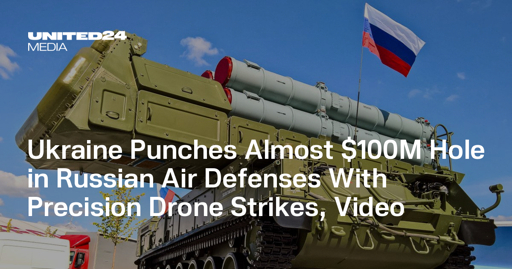
Remember, Russia is primarily relying on glide bombs to put artillery pressure on the front because Ukraine has so effectively denied Russia the ability to move its artillery into forward threatening positions.
Ukraine’s use of drones here thus could collapse the Russian war machine if Ukraine gets good enough at this.
I have made this point before but this is precisely why helicopters that can mount radars are more relevant than ever and more survivable than fixed wing aircraft, they aren’t tied to massive static airbases and infrastructure.
Unfortunately at least on the english speaking internet the overall quality of resources for this has plummeted. To be frank, I think a lot of this has to do with the necessary dumbing down that has been applied to the media over conversations about war ever since 9/11 sent authoritarianism in the US into overdrive and reduced justifications for military strikes into cartoonish cynical jokes, this process has reached an absolute peak in utterly denying the Palestinian Genocide and pretending it is a war and as a result discussion in english speaking media about ALL wars and conflicts right now has been reduced to baby like parroting of whatever the military and politicians say with no journalistic critique of the narrative being presented from a perspective of known established realities about war. “tanks are obsolete!” “helicopters are obsolete!!” “artillery is obsolete!” … it is honestly exhausting.
That coupled with enshittification makes this a very difficult time to find good information even as in many ways paradoxically there has never been better access to information.
That rant aside, this article is a good place to start
In general I would pay attention to defense news websites and also note the general structure of joint european military exercises, they typically display the cohesive intention behind what can feel like meaningless unrelated details of arms procurement.
In a way I think the best way to put a picture together for yourself is to think of an abstracted idea of an armored brigade combat team with supporting drone, air and naval assets.
Armored Battalion (×2)

    Headquarters and Headquarters Company
    Tank Company (×2)
    Mechanized Infantry Company

Mechanized Infantry Battalion (×1)

    Headquarters and Headquarters Company
    Tank Company
    Mechanized Infantry Company (×2)

Cavalry Squadron (×1)

    Headquarters and Headquarters Troop
    Tank Troop (×2)
    Cavalry Troop (x2)

Field artillery (fires) battalion

    Headquarters and headquarters battery
        Target acquisition platoon
    M109 155 mm self propelled howitzer battery (×2)

Brigade engineer battalion

    Headquarters and headquarters company
    Combat engineer company
    Engineer support company
    Signal company
    Military intelligence company

Brigade Support Battalion

    Headquarters and Headquarters Company
    Distribution Company
    Field Maintenance Company
    Medical Company
        Headquarters Platoon
        Treatment Platoon
        Medical Evacuation Platoon
    Forward Support Company (Cavalry)
    Forward Support Company (Combined Arms) (×3)
https://en.wikipedia.org/wiki/Brigade_combat_team
Consider all the primary equipment needed for a wholistic “unit” of an equivalent fighting force along with drones, aircraft and navy if applicable. Don’t forget bridgelayers and logistics! In general, considering the largest militaries in Europe such as the German military then ask the basic question what is the state of that countries equipment for those major roles? What is the state of Germany’s Infantry Fighting Vehicle and Main Battle Tanks?
That is relatively easy to google and get good information on, it is easy to establish for example that the Lynx and Leopards are extremely advanced fighting vehicles that have undergone many series of modernizations. You can compare this to the UK whose Ajax IFV vehicles are so broken that they vibrate too violently for the soldiers inside to not be injured by it. From this perspective of evaluating the state of equipment programs things are much more accessible.
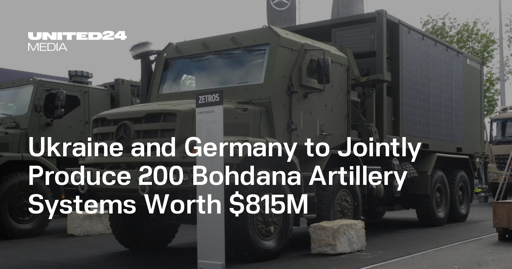
Poland and Germany are two easy to point to European nations that have massively increased the power of their military. Poland alone with its orders of K2 and Abrams tanks, piles and piles of AH-64 helicopters and plenty of ground based missile and tube artillery now represents an extremely intimidating military power. I suppose it might not all be deployable tomorrow, but the longterm trajectory is definitely not a slow, limping subdued reaction. Both HIMARS type rocket artillery and traditional cannon artillery are crucial types of equipment to consider as well and Europe has thoroughly rearmed itself with both and will continue to do so into the indefinite future I imagine.
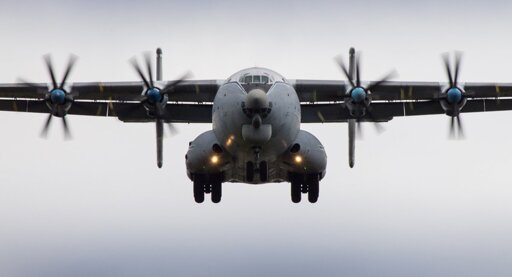
Lastly consider fighter aircraft programs as they are a strategic asset, here is easiest you can find lots of news about the increase of fighter aircraft production and modernization in European militaries. The fact that Canada would even consider purchasing European fighter aircraft instead of US equivalents even as it is neighbors of the US, yes even given the political situation right now, says a lot in itself. I also think the ability of France to donate Mirage 2000-5F aircraft to Ukraine reveals a depth and breadth to Europe’s sophisticated fighter-bomber aircraft stock demonstrating a serious increase in strength. Military airlift is the other big aviation asset (especially considering the future dominant role of Rapid Dragon type systems) that people always overlook and there again Europe is in a stronger position than ever with the Airbus A400M.


Firefighting robots!