I’m a software engineer at AWS and work on video content delivery for services like Netflix. The idea that one single ad could cover the cost of delivering a video that’s been replicated in multiple servers, multiple regions, multiple countries throughout the world is pretty hilarious. No matter how much money you think YouTube is making I can almost guarantee it’s not enough. There is a reason there is no significant competition in this space, it makes no money.
If you think it’s sustainable you can create a new service yourself, no one is stopping you. I’ve done cost estimations for projects with 1M+ customers and the margins are so tight we’ve killed at least a dozen services despite pouring months or years of effort into their designs and prototypes. It’s easy for you to complain about freebies from your couch but the reality is that if someone could make a better service than YouTube, they already would have. “Spare is your tears” lol.
Question that pertains to general hosting at those scales. In your opinion what costs more, distributing a piece of content that will get 1M views, or 1000 pieces of content that will get 1000 each? I know the math wont add up, but I dont know where the cost bottleneck is. Is hosting something even though it isnt used or that viral spike in views that kills attempts to make a smaller service like this?
For the type of service they are (hosting random one-off videos and series that anyone can load and optionally kicking back a portion to the content creators) - who are they competing against? If you go on the street and ask random people to name 3 streaming services that do that, you’ll likely get YouTube, “ummm”, and “I dunno”
It’s not really a single ad though, right? It’s a single ad per view. I realize that each view costs money, but at some point you’re just paying for bandwidth, after paying the upfront replication costs right? Assuming replication is an upfront cost, I might be misunderstanding there. If that’s true though, then surely there’s a breakpoint where ads start making money. Though I suppose if that breakpoint is like a million views, your point basically still stands.
You’re forgetting amortization. You can’t copy a video file to a drive and expect it to last forever. It requires energy to run and the drivers break down over time. Google is one of the largest consumers of HDDs and SSDs in the world. Plus you need to pay engineers who maintain the whole thing, pay the finance team to make orders, etc. And then you have to have recycling and logistics. I bet they dispose of the whole truck loads of old drives every day, you can’t put that many in your recycling bin and call it a day.
How is been running for almost 20 years, most of them with very few ads?
I doubt they had been just sinking money for the kind of their hearts.
I do not know how much it cost to run a service like YouTube. Or how much money they make by ads or other ways. But they have been running for long enough to be a successful business.
And it’s just the latest few years when they are pushing these aggressive techniques.
How is been running for almost 20 years, most of them with very few ads?
Investor money, then Google money. Video streaming requires fuckloads of storage and is a HUGE bandwidth hog, especially if people want to watch stuff at 1080p or higher resolutions. Youtube is a money pit, but it’s a major and nearly untouchable internet power, especially given its size and reach.
And it’s just the latest few years when they are pushing these aggressive techniques.
The “easy money” from loans with very low interest rates has dried up, also Google being Google.
There’s also the cost to transcode the video and audio streams into different formats so they don’t have to do it on demand whenever someone watches a video. That’s a lot of compute cost plus they have to store all of those additional transcodes which is more storage cost.
I know that for many years in the 2000s and early 2010s- what many consider to be the golden age of Youtube- they were losing money. That’s what I think a lot or people don’t get when they claim “enshittification”- the services they are complaining about are unsustainable in their current form. That’s what it takes to establish a digital product- grow your base first while bleeding money, then figure out a way to monetize it later. As capital tightens up, the clock is running out for brands like Netflix, Discord, Youtube etc to start making money. That’s the part that sucks as a consumer but idk what else YouTube can do if it wants to be profitable. They offer a premium version for people that don’t want to watch ads.


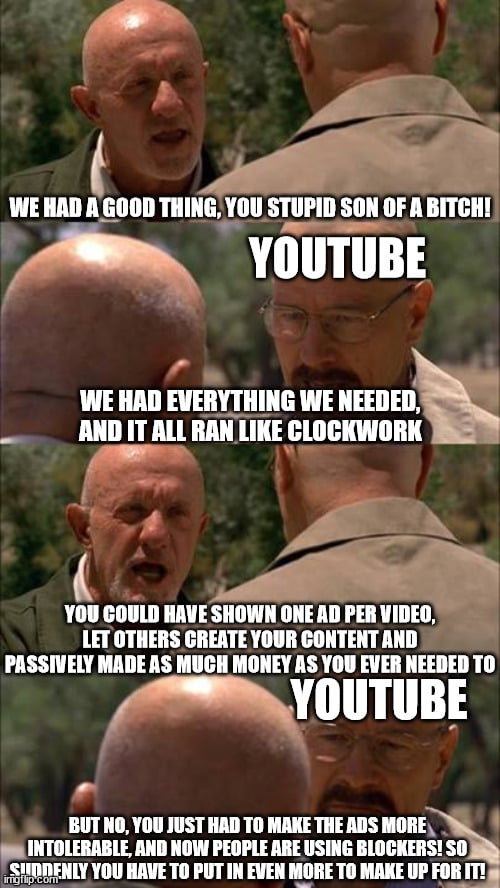
I’m a software engineer at AWS and work on video content delivery for services like Netflix. The idea that one single ad could cover the cost of delivering a video that’s been replicated in multiple servers, multiple regions, multiple countries throughout the world is pretty hilarious. No matter how much money you think YouTube is making I can almost guarantee it’s not enough. There is a reason there is no significant competition in this space, it makes no money.
deleted by creator
If you think it’s sustainable you can create a new service yourself, no one is stopping you. I’ve done cost estimations for projects with 1M+ customers and the margins are so tight we’ve killed at least a dozen services despite pouring months or years of effort into their designs and prototypes. It’s easy for you to complain about freebies from your couch but the reality is that if someone could make a better service than YouTube, they already would have. “Spare is your tears” lol.
Question that pertains to general hosting at those scales. In your opinion what costs more, distributing a piece of content that will get 1M views, or 1000 pieces of content that will get 1000 each? I know the math wont add up, but I dont know where the cost bottleneck is. Is hosting something even though it isnt used or that viral spike in views that kills attempts to make a smaller service like this?
For the type of service they are (hosting random one-off videos and series that anyone can load and optionally kicking back a portion to the content creators) - who are they competing against? If you go on the street and ask random people to name 3 streaming services that do that, you’ll likely get YouTube, “ummm”, and “I dunno”
deleted by creator
deleted by creator
It’s not really a single ad though, right? It’s a single ad per view. I realize that each view costs money, but at some point you’re just paying for bandwidth, after paying the upfront replication costs right? Assuming replication is an upfront cost, I might be misunderstanding there. If that’s true though, then surely there’s a breakpoint where ads start making money. Though I suppose if that breakpoint is like a million views, your point basically still stands.
You’re forgetting amortization. You can’t copy a video file to a drive and expect it to last forever. It requires energy to run and the drivers break down over time. Google is one of the largest consumers of HDDs and SSDs in the world. Plus you need to pay engineers who maintain the whole thing, pay the finance team to make orders, etc. And then you have to have recycling and logistics. I bet they dispose of the whole truck loads of old drives every day, you can’t put that many in your recycling bin and call it a day.
Genuine question.
How is been running for almost 20 years, most of them with very few ads?
I doubt they had been just sinking money for the kind of their hearts.
I do not know how much it cost to run a service like YouTube. Or how much money they make by ads or other ways. But they have been running for long enough to be a successful business.
And it’s just the latest few years when they are pushing these aggressive techniques.
Investor money, then Google money. Video streaming requires fuckloads of storage and is a HUGE bandwidth hog, especially if people want to watch stuff at 1080p or higher resolutions. Youtube is a money pit, but it’s a major and nearly untouchable internet power, especially given its size and reach.
The “easy money” from loans with very low interest rates has dried up, also Google being Google.
There’s also the cost to transcode the video and audio streams into different formats so they don’t have to do it on demand whenever someone watches a video. That’s a lot of compute cost plus they have to store all of those additional transcodes which is more storage cost.
I know that for many years in the 2000s and early 2010s- what many consider to be the golden age of Youtube- they were losing money. That’s what I think a lot or people don’t get when they claim “enshittification”- the services they are complaining about are unsustainable in their current form. That’s what it takes to establish a digital product- grow your base first while bleeding money, then figure out a way to monetize it later. As capital tightens up, the clock is running out for brands like Netflix, Discord, Youtube etc to start making money. That’s the part that sucks as a consumer but idk what else YouTube can do if it wants to be profitable. They offer a premium version for people that don’t want to watch ads.
I feel like I would need to see their accounting books to fully believe that narrative.
The lack of accounting transparency makes all a tale of “trust me I need this money to make this work”.
Sounds like the public library system should host the peoples videos as a service, not for profit.
deleted by creator
Idk about your system, but mine is currently facing a massive budget cut
Yep. Hence why we need to remake the internet.
Good luck with that :thumbsup:
deleted by creator